&geometry(195x100) "Lockyer Hire")


Plate Compactor vs Wacker Packer vs Roller: What’s Best for Your Job?
For builders, landscapers, civil contractors, drainage crews and earthworks teams, choosing the right compaction equipment is about more than simply getting the ground firm. It affects productivity, finish quality, labour time, site access and whether the job keeps moving without delays.
In many cases, businesses are not hiring compaction equipment for a one-off job. They may need an additional machine for a busy period, a replacement while their own equipment is being repaired, or a more suitable option for a specific site condition. A machine that works well on one project may not be the best fit for the next.
At Lockyer Hire, we work with commercial customers across Ipswich and South East Queensland who need practical access to plate compactors, upright rammers and rollers for landscaping, construction, drainage, civil works and site preparation. This guide explains what each machine is best suited to, when to use it, and how to choose the right equipment for the job.
Quick Answer: Which Compaction Equipment Do You Need?
If you need the short version, here is a practical guide.
A plate compactor is usually best for road base, crusher dust, paving preparation and smaller open areas where you need a fast, even finish.
A wacker packer, also known as an upright rammer, is often the better choice for trench work, confined spaces and backfilling where a more concentrated impact is needed.
A roller is generally the right option for larger open areas such as driveway preparation, access tracks, hardstand areas and broader civil or landscaping works.
That is the quick answer, but the best result always comes back to the site conditions, material type, access and scale of the work. Choosing the right machine is a bit like choosing the right vehicle for a job. A ute, a tipper and an excavator all play their part, but no one wants to be the person trying to do everything with the wrong one.
What Is the Difference Between, a Plate Compactor, Wacker Packer and Roller?
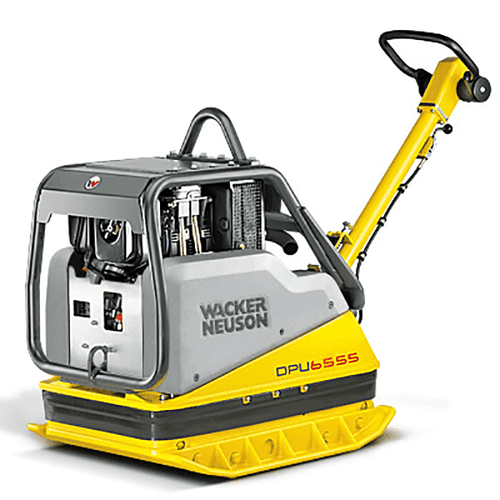
Plate Compactor
A plate compactor uses vibration through a flat steel plate to compact material from the surface down. It is commonly used for road base, crusher dust, gravel, sand and other compactable materials where a level, even finish is important.
For commercial operators, a plate compactor is often used for:
- Paving and footpath preparation
- Landscaping and retaining wall projects
- Small to medium driveway base work
- General surface compaction
- Repair and reinstatement work
Plate compactors are especially useful when you need strong surface compaction across a manageable open area and want a clean, consistent result.
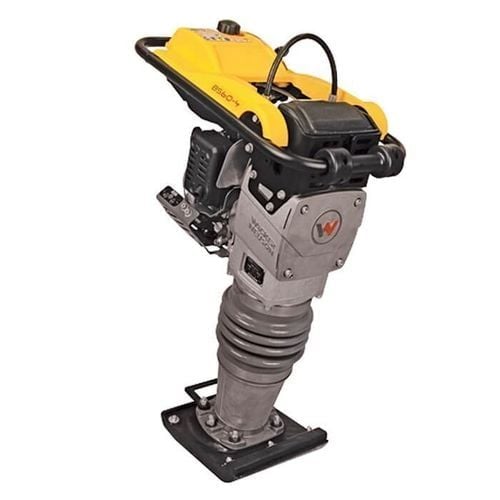
Wacker Packer or Upright Rammer
A wacker packer, often called an upright rammer, is designed for tighter access and more targeted compaction. It delivers a concentrated impact, making it ideal for trenches and confined spaces where a broader machine may be awkward or less effective.
For commercial and trade jobs, upright rammers are often used for:
- Trench backfill
- Drainage work
- Service line installations
- Footings and post holes
- Confined access areas
If a plate compactor is the all-rounder, the wacker packer is the specialist. It is built for the tight spots and the kind of jobs where site access usually has a sense of humour.
Roller
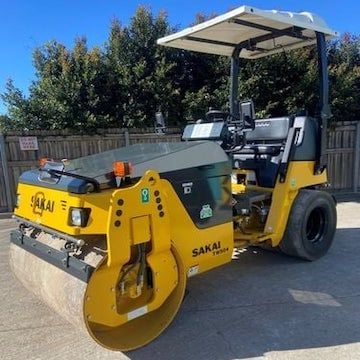
A roller is suited to larger open areas where efficient coverage matters. It is the better fit when a smaller hand-guided machine would take too long or require too many passes to be practical.
For commercial jobs, rollers are commonly used for:
- Driveway and access road preparation
- Hardstand areas
- Broad landscaping works
- Civil and site works
- Larger surface compaction projects
Where time, coverage and consistency are important, a roller is often the more productive choice.
How to Choose the Right Compaction Equipment for Commercial Projects in Ipswich
When deciding between a plate compactor, wacker packer and roller, the three main things to consider are:
- the size of the area,
- the material being compacted,
- and the access available on site.
If the site is broad and open, a roller may be the right fit.
If the area is smaller and relatively flat, a plate compactor is often ideal.
If the work is in a narrow trench or tight access zone, a wacker packer is usually the smarter option.
For commercial operators, this choice matters because using the wrong machine can slow the job, increase labour time, affect finish quality and create unnecessary rework later.
Best Compaction Equipment for Builders
Builders often need compaction equipment for slab prep, driveway preparation, footpath work, backfill and reinstatement around completed works.
For smaller open areas and base prep, a plate compactor is often the go-to option.
For larger access areas or broader site-preparation work, a roller may be a better fit.
For tight trenches, service areas or limited access points, a wacker packer is usually more practical.
The best choice often depends on whether the job is about coverage, access or precision.
Best Compaction Equipment for Landscapers
Landscapers regularly need compaction equipment for paving bases, retaining wall backfill, pathways, garden edging, site levelling and outdoor hardscaping.
A plate compactor is often the most versatile option for this kind of work because it suits a wide range of base materials and smaller open areas.
Where access becomes tight, such as between retaining walls or in narrow side access zones, a wacker packer may be more suitable.
For larger landscape builds, access roads or broad surface prep, a roller can save time and improve efficiency.
Best Compaction Equipment for Drainage and Civil Contractors
Drainage contractors, plumbers and civil crews often need compaction equipment for trench backfill, service installations, site reinstatement and road base preparation.
This is where the wacker packer often comes into its own. Its narrower footprint and concentrated force make it ideal for trench work and confined spaces.
For larger reinstatement areas or broader surface work, a plate compactor or roller may be more efficient depending on the scale of the site.
Best Compaction Equipment for Driveways and Hardstand Areas
For driveway preparation and hardstand work, the right machine usually depends on the size of the project.
A plate compactor can work well for smaller residential or light commercial areas, particularly where road base and similar materials need to be compacted before the final surface is applied.
For larger driveway projects, access ways or wider open surfaces, a roller is often the more productive option because it covers more ground and is better suited to larger areas.
When preparing a base for paving, asphalt or another final finish, getting compaction right at this stage is critical. A good-looking surface can only do so much if the base underneath has been given the mechanical equivalent of wishful thinking.
Common Commercial Hire Scenarios
Breakdown Replacement
One of the most common reasons businesses hire compaction equipment is because their own machine is down for repair or servicing. When the job still needs to keep moving, a short-term replacement can help avoid downtime and keep crews productive.
Overflow Equipment During Busy Periods
During peak periods, businesses may need additional compaction equipment to support multiple crews or run more than one project at a time. Hiring gives you flexibility without needing to purchase more machinery outright.
Project-Specific Equipment Needs
A contractor may already own one type of compactor but need a different machine for a specific site. For example, a team that normally uses a plate compactor may need an upright rammer for confined trench work, or a roller for a broader open-area project.
Short-Term Civil and Site Preparation Work
For occasional civil, drainage, driveway or hardstand jobs, hiring the right machine can be far more practical than investing in equipment that will only be used from time to time.
Why Hiring Compaction Equipment Makes Sense for Commercial Operators
For many builders, landscapers and contractors, hiring compaction equipment is not just about convenience. It is a practical way to keep projects moving, control costs, and get access to the right machine for the work at hand.
Hiring can make sense when:
- Your own machine has broken down,
- You need additional equipment for multiple jobs,
- A specific project requires a different machine type,
- You want to avoid delays while waiting on repairs,
- Or you need short-term access to equipment without the cost of purchasing another unit.
It also means you can match the machine to the job rather than trying to make one piece of equipment do everything. That usually ends about as well as using a butter knife as a screwdriver.
Common Mistakes When Choosing Compaction Equipment
Choosing based on size alone
Bigger is not always better. A larger machine may look more capable, but if it does not suit the space or material, it can slow things down and make the job harder.
Using the wrong machine for the site: A broad plate compactor is not ideal for narrow trench work, and a rammer is not the most efficient choice for a large open area. Matching the equipment to the site conditions is key.
Ignoring material type: Different materials respond differently to compaction. What works well for road base or crusher dust may not be the best approach for trench backfill or confined work zones.
Trying to do too much in one pass: Compaction usually works best when material is managed and compacted properly in layers, rather than all at once.
Need a Replacement or Extra Compaction Machine Fast?
If your equipment is down, your workload has increased, or you need the right compaction machine for a specific site, Lockyer Hire can help.
At Lockyer Hire, we supply plate compactors,upright rammers and rollers to commercial customers across Ipswich and South East Queensland, with practical advice to help match the machine to the job. Whether you need a short-term replacement, extra equipment for a busy period or the right machine for a specialised project, our team can help you get sorted quickly.
Explore our compaction equipment range or get in touch with our team to discuss current availability.
Common Questions on the Best Machine by Material
What is the best machine for Road Base and Crusher Dust
- For smaller to medium-sized areas, a plate compactor is often a strong choice for road base and crusher dust, especially on paving and driveway preparation jobs.
- For larger open areas, a roller may be more efficient and better suited to the scale of the work.
What is the best machine for Sand and Bedding Material
- Plate compactors are commonly used for compacting sand and bedding material where a level, stable base is needed.
What is the best machine for Cohesive Soils and Trench Backfill
- For trench work and confined spaces, a wacker packer is often the better fit due to its more targeted impact and tighter working footprint.
What is the best machine for Large Open Areas?
- Where broad, consistent coverage is required across a large surface, a roller is generally the most practical option.
| Tags:ProductsLandscaping |